Consultants Speak Polish

Abortion in the Czech Republic is supported by comprehensive medical care and legal regulations that allow the procedure to be performed safely and in a way that meets the individual needs of each patient.
Pregnancy Termination – Legal Implications
Ending a pregnancy also involves certain legal implications. Regulations vary from country to country, and sometimes even between regions, which is why it is important for each patient to be aware of her rights and responsibilities. Abortion clinics usually offer legal consultations to help patients understand what steps are required before undergoing the procedure.
Legality of Abortion – Pregnancy Termination in the Czech Republic
Abortion in the Czech Republic is legal up to the 12th week of pregnancy. The law also allows pregnancy termination after this period, but only in cases where the continuation of the pregnancy poses a threat to the woman’s life or health, provided the circumstances meet the legal criteria. In situations where there is justified suspicion of severe fetal abnormalities or an incurable life-threatening condition, abortion may be performed beyond the standard timeframe.
Types of Abortion Methods – Abortion in the Czech Republic
Abortion in the Czech Republic is regulated by law, allowing the procedure to be carried out in safe and controlled conditions. Pregnancy termination is performed using two main methods: medical (pharmacological) and surgical. The medical method involves administering medication (abortion pills/early medical abortion pills) that induces the termination of pregnancy, usually in its early stages. The surgical method includes various procedures, such as vacuum aspiration, which is used in later stages of early pregnancy. Both methods are performed based on the patient’s medical condition and the gestational age.
Some women also choose long-term contraceptive methods, such as hormonal or copper intrauterine devices (IUDs), tubal ligation, or other forms of contraception. These are preventive solutions that help avoid the need for pregnancy termination in the future.
Medical Abortion
Medical abortion is the preferred method for terminating an unplanned pregnancy during the first trimester. This procedure is performed using abortion pills such as mifepristone and misoprostol. The medications work by inducing the shedding of the endometrium and uterine contractions, which leads to the termination of the pregnancy. This method is valued for its discretion and minimally invasive nature, making it a suitable option for many women. Medical abortion can be performed on an outpatient basis in our clinic and usually does not require an extended stay — most patients can return home the same day.
Surgical Abortion
For pregnancies that extend beyond the first trimester, surgical abortion methods are used. These procedures may be performed using minimally invasive laparoscopy or vacuum aspiration. Both techniques are recommended due to their high effectiveness at later stages of pregnancy.
Vacuum aspiration is a procedure that gently removes the contents of the uterus using a suction device. In cases of more advanced pregnancies, dilation and evacuation (D&E) is often required, which involves carefully dilating the cervix and removing the pregnancy tissue with surgical instruments.
All procedures are carried out under general anesthesia to ensure comfort and minimize discomfort for the patient. Surgical abortions are performed in sterile clinical conditions by experienced specialists, ensuring the highest level of safety and effectiveness.
In both cases, clinics in the Czech Republic provide comprehensive support for patients, offering not only medical procedures but also psychological counselling and post-procedure care, which is essential for a holistic approach to healthcare.
Pregnancy Termination Procedure – Medical Documentation
In the Czech Republic, pregnancy termination procedures are carried out according to strict medical protocols designed to ensure patient safety and well-being. Before undergoing an abortion, a series of diagnostic tests is required to assess the woman’s health and determine the specifics of the pregnancy. Standard pre-abortion tests include an ultrasound examination to determine gestational age and rule out an ectopic pregnancy, blood tests (including blood type and Rh factor), as well as general bloodwork and tests evaluating liver and kidney function.
After the abortion—whether pharmacological or surgical—patients are required to attend follow-up examinations. The purpose of these tests is to confirm that the pregnancy has been completely terminated and that no complications have occurred. Post-procedure follow-up typically includes an additional ultrasound to ensure the uterus is empty, as well as a general health assessment. In some cases, especially after surgical abortion, an ECG may also be recommended to monitor the effects of general anesthesia on heart function.
These preventive and follow-up measures are essential to ensuring that pregnancy termination in the Czech Republic is performed safely, ethically, and in accordance with the highest medical standards, with full attention to each woman’s well-being.
Maintaining Medical Standards – Abortion in the Czech Republic
Every abortion procedure in the Czech Republic is preceded by a series of medical tests, including an ECG, ensuring that the termination is performed safely and in accordance with medical guidelines. Clinics in the Czech Republic maintain a high standard of healthcare, guaranteeing that all procedures are carried out in line with the best medical practices.
The Importance of ECG Testing Before the Procedure – Abortion in the Czech Republic
Before the procedure, an ECG test is required. This is a standard diagnostic examination that evaluates the heart’s electrical activity and can detect any abnormalities that might affect the patient’s safety during the procedure.
In treatments requiring general anaesthesia, such as surgical abortion, the ECG test becomes particularly important. It allows doctors to assess the patient’s cardiac condition and adjust the anaesthetic plan to her individual needs. This ensures that each patient receives the safest, most appropriate care, while minimising the risk of cardiac complications related to the medical procedure.
How Much Does an Abortion Cost in the Czech Republic?
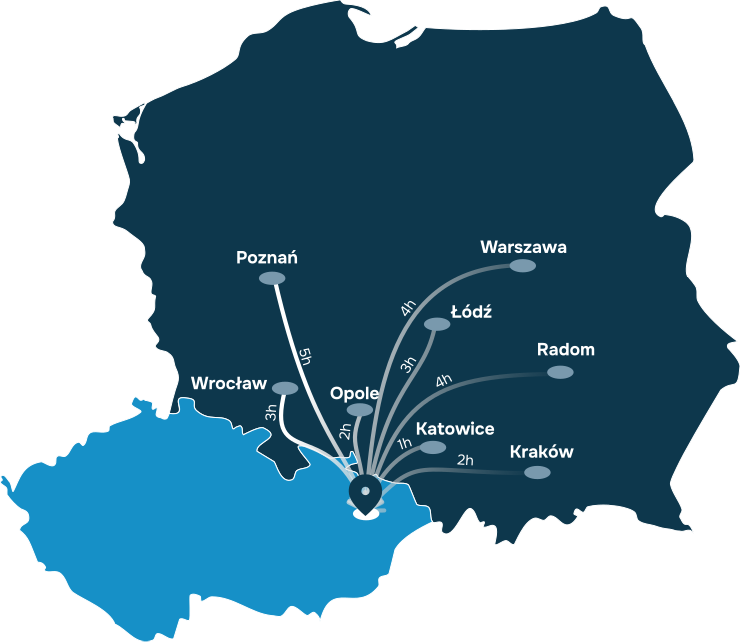
For many patients travelling from Poland, the key question is the cost of the abortion procedure in the Czech Republic. A legal abortion includes not only the termination itself, but also comprehensive diagnostic examinations such as the ECG test, ultrasound, and follow-up care. Costs vary depending on the method chosen. Abortion pills used for medical abortion are generally a more affordable option than surgical procedures performed under general anaesthesia.
Diagnostics Before the Procedure – What You Need to Know About Abortion
Every abortion procedure in the Czech Republic requires appropriate diagnostic testing. These examinations help determine the patient’s health condition, reduce the risk associated with the procedure, and ensure that the termination is performed safely and in line with medical standards. They include blood tests to establish blood group and Rh factor, an ultrasound scan to determine gestational age, and an ECG test to assess heart function before the use of general anaesthesia. These diagnostic measures ensure maximum safety for the patient, including those travelling from abroad.
Recommendations Before and After the Procedure – Restrictions and Guidelines Provided by the Gynecology Clinic
Before and after a pregnancy termination procedure, the gynecology clinic provides patients with detailed recommendations aimed at increasing safety and supporting the healing process. Below is an overview of the most common restrictions and guidelines.
Before the Procedure
- Smoking Cessation
Smoking can negatively affect the functioning of the respiratory and cardiovascular systems during general anaesthesia. Complete cessation of smoking is recommended for at least 24 hours before the procedure. - Eating Only Light Meals
For several hours before the procedure, patients should avoid heavy or fatty foods. If the procedure is performed under general anaesthesia, fasting for a specified period is required to minimise the risk of anaesthetic complications. - Avoiding Alcohol
Alcohol may interfere with the effects of medications used during the procedure and increase the risk of complications. For this reason, patients are advised to abstain from alcohol for at least 48 hours prior to the procedure. - Informing the Doctor About Current Medications
Patients must report all medications they are taking, especially those that affect blood clotting. Some medications, such as aspirin, may need to be discontinued several days before the procedure. - Maintaining Personal Hygiene
On the day of the procedure, patients are advised to thoroughly wash their body, especially intimate areas, to reduce the risk of infection.
After the Procedure
- Abstaining from Sexual Intercourse
Sexual activity should be avoided until bleeding has completely stopped and the uterus has fully healed, which usually takes a few weeks. Intercourse during this time increases the risk of infection and may delay recovery. - Avoiding the Use of Tampons
After the procedure, only sanitary pads should be used. Tampons may cause irritation and promote the development of infection. - Avoiding Intense Physical Activity
During the recovery period, patients should avoid heavy lifting, strenuous exercise, and other forms of intense physical activity, as these may strain the body and prolong the healing process. - Avoiding Baths, Swimming Pools, or Lakes
Until bleeding has fully resolved, submerging the body in water should be avoided, as it can increase the risk of infection. Showers are recommended instead. - Maintaining a Proper Diet
After the procedure, patients should eat light, balanced meals rich in vitamins and minerals to support the body’s healing process. - Refraining from Smoking and Alcohol Consumption
To support tissue regeneration and reduce the risk of complications, patients should avoid irritants such as nicotine and alcohol for at least several days after the procedure.. - Attending Regular Follow-up Appointments
It is crucial to attend follow-up visits at the times recommended by the doctor. During these appointments, the physician will confirm that the healing process is progressing properly and that the uterus has completely cleared. - Avoiding Intravaginal Products
Products such as vaginal tablets or gels should not be used, as they may interfere with natural healing processes. - Monitoring Bleeding and Symptoms
Patients should pay attention to heavy bleeding and any concerning symptoms such as strong abdominal pain, fever, or unpleasant-smelling discharge. If any doubts arise, they should contact the gynecology clinic immediately. - Avoiding Stress and Resting
Adequate rest and avoiding stressful situations are key to supporting the healing process, as stress can negatively affect recovery.
These guidelines are intended to protect the patient’s health and minimize the risk of complications associated with the abortion procedure. All recommendations are tailored individually, depending on the method used and the patient’s overall health.
Post-procedure Care – Follow-up Examinations and Support Offered by the Abortion Clinic
After the termination of pregnancy, clinics provide patients with follow-up examinations to confirm that the procedure was successful and to rule out any complications. In the case of surgical abortion, it is particularly important to monitor overall health, including ovarian hormonal activity, as well as to perform additional ultrasound scans if further uterine cleaning is needed.